
THE RUNNING MAN (1987): A Gleefully Over-the-Top Dystopian Thrill Ride
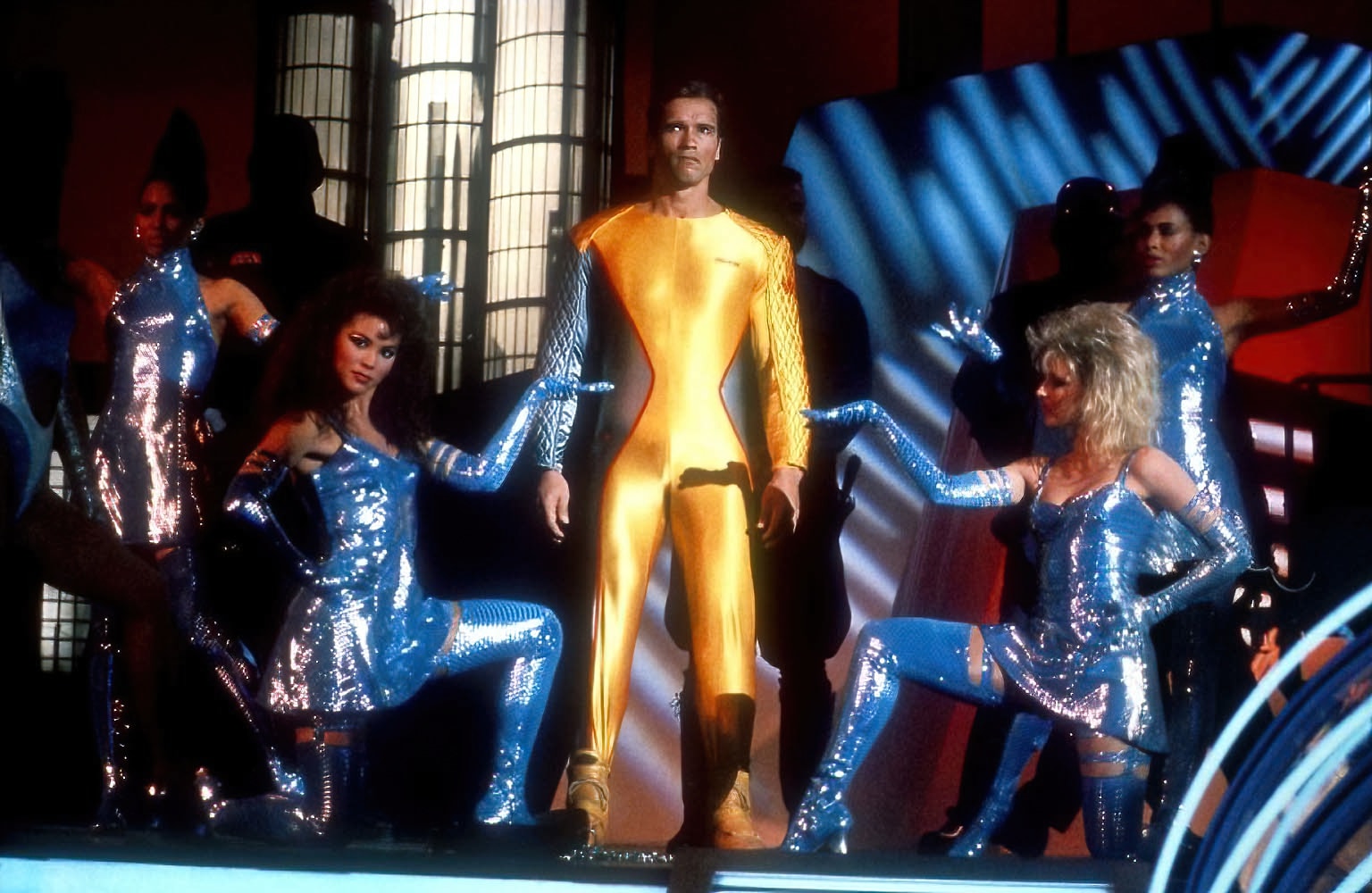
By the time The Running Man hit theaters in 1987, Arnold Schwarzenegger was riding an unstoppable wave of stardom. Coming off iconic films like Conan the Barbarian (1982), The Terminator (1984), and Predator (1987), Arnold had cemented himself as the ultimate action star of the ‘80s, blending muscle-bound physicality with undeniable charisma. The Running Man doesn’t reach the groundbreaking brilliance of The Terminator or the primal intensity of Predator, but it’s an unapologetically fun sci-fi spectacle that showcases Schwarzenegger at his larger-than-life best.
Based loosely on the Stephen King (writing as Richard Bachman) novel of the same name, The Running Man trades the novel’s grim, grounded tone for an absurd, neon-soaked dystopia. It’s not a masterpiece, but it’s an endlessly entertaining ride that blends sharp satire, brutal action, and Arnold’s iconic quips into a uniquely ‘80s package.
A Dystopian Game Show with a Dash of Satire
Set in the not-so-distant future of 2017 (ah, the irony), The Running Man imagines a world where society is controlled by a totalitarian government that distracts the public with violent, gladiator-style reality TV. The most popular show, The Running Man, pits convicted criminals against heavily armed “stalkers” in a deadly game of survival.
Enter Ben Richards (Schwarzenegger), a former military pilot framed for massacring civilians. Forced to participate in The Running Man after escaping prison, Richards must fight his way through a gauntlet of colorful killers while uncovering the truth about the corrupt system that put him there.
The concept of The Running Man is inherently absurd, but it’s also a biting satire of media culture, government control, and our appetite for spectacle. The film doesn’t dive as deeply into these themes as, say, RoboCop (1987) or Total Recall (1990), but it has a lot of fun riffing on them. From Richard Dawson’s delightfully slimy performance as game-show host Damon Killian to the gaudy, exaggerated production design, the film gleefully leans into its critique of entertainment as a tool for manipulation and control.
Arnold Schwarzenegger: The King of Action Quips
As Ben Richards, Schwarzenegger is in full action-hero mode, delivering everything you want from an ‘80s Arnold performance. He’s tough, resourceful, and almost superhuman in his ability to demolish enemies with his bare hands. But what really makes him shine here is his knack for delivering one-liners with deadpan perfection.
Lines like “Here is Sub-Zero, now plain Zero!” and “I’ll be back!” (yes, they worked that in again) are quintessential Schwarzenegger, blending humor with badassery in a way only he can. These quips, while cheesy, add to the film’s campy charm and remind us why Arnold became the face of the action genre.
Unlike his more serious roles in The Terminator or Predator, where the stakes felt life-or-death at every turn, Arnold’s performance in The Running Man is more playful. Richards doesn’t feel like a tortured or haunted character—he’s a hero who knows he’s in a ridiculous situation and embraces it with confidence. It’s a tone that fits the film perfectly, even if it lacks the depth of his work in films like Total Recall.
A Colorful Cast of Villains
One of the highlights of The Running Man is its lineup of stalkers, each with their own outlandish gimmicks and personalities. From Sub-Zero, the hockey-playing executioner, to Dynamo, the opera-singing, electricity-shooting maniac in a glowing suit, the stalkers are pure B-movie absurdity. They feel like something out of a dystopian wrestling league, which is fitting given the film’s satirical take on televised violence.
While none of the stalkers match the raw, primal threat of the Predator or the relentless menace of the T-1000 in Terminator 2: Judgment Day (1991), they’re perfectly suited to the film’s over-the-top tone. Watching Schwarzenegger take them down one by one is immensely satisfying, even if it’s never particularly suspenseful.
Richard Dawson Steals the Show
While Schwarzenegger is the film’s undeniable star, Richard Dawson’s performance as Damon Killian is a show-stealer. The former Family Feud host is perfectly cast as the smarmy, manipulative game-show producer who thrives on ratings and spectacle. His blend of charm and cruelty makes him one of the most memorable villains in Schwarzenegger’s filmography, even if he’s not a physical threat.
Killian’s interactions with Schwarzenegger provide some of the film’s best moments, especially in the final act when the tables are turned. Dawson brings an extra layer of wit and charisma to the film, elevating it beyond a standard action flick.
Action and Aesthetic: Pure ‘80s Excess
If you love the bombastic, neon-soaked style of ‘80s sci-fi, The Running Man is a feast for the senses. From the gaudy game-show sets to the synth-heavy score, the film feels like a time capsule of the decade’s over-the-top aesthetic.
The action sequences are brutal and entertaining, even if they lack the polish and innovation of Schwarzenegger’s best films. The fights with the stalkers are fun, but they’re not as tightly choreographed or intense as the jungle ambushes in Predator or the chase scenes in The Terminator. What The Running Man lacks in finesse, it makes up for in sheer energy and creativity.
Themes That Are Surprisingly Relevant
While The Running Man often feels like a campy action flick, its satirical themes have aged surprisingly well. The film’s critique of media manipulation, government control, and our obsession with violence-as-entertainment feels eerily prescient in the age of reality TV, social media, and sensationalized news.
That said, the film doesn’t dive deeply into these ideas, preferring to keep the focus on the action and spectacle. Compare this to Total Recall, which used its sci-fi setting to explore themes of identity and memory in a more meaningful way. The Running Man flirts with deeper commentary but never fully commits, leaving its satire feeling surface-level.
A Fun, Flawed, and Unapologetically Entertaining Ride
The Running Man doesn’t have the groundbreaking innovation of The Terminator, the emotional depth of T2, or the visceral tension of Predator. But it doesn’t need to—it’s a different kind of Schwarzenegger movie, one that revels in its absurdity and invites the audience to do the same.
For fans of ‘80s action and sci-fi, The Running Man is a must-watch. It’s a campy, colorful thrill ride that showcases Arnold at his charismatic best, surrounded by a world so ridiculous it loops back around to being awesome. It may not be as iconic as some of his other masterpieces, but it’s a perfect example of why Schwarzenegger dominated the box office in the ‘80s: he knew how to have fun, and he made sure the audience did, too.
In the end, The Running Man proves one thing: no matter how dystopian the future gets, there’s always room for a few good one-liners. And when it comes to delivering those, nobody does it better than Arnold.

Jakob Montrasio
Frontend developer at DIE RHEINPFALZ, photographer under @yakobusan, occasional filmmaker — directed The Way of the Spur in Shanghai, co-directed the Golden Eye–nominated Souls of Zen. Started in Freiburg in 1982, still hasn't picked just one thing.
Related posts

„Die Dolmetscherin“: Ein leiser Thriller, der an seinen eigenen Ansprüchen scheitert
Die Dolmetscherin von Sydney Pollack beginnt als klassischer, eleganter Politthriller, der an die Atmosphäre eines Hitchcock-Films erinnert. Die Spannung wird mit Ruhe aufgebaut, getragen von…

Rancid – Treibjagd durch die Nacht: Ein düsterer Thriller mit New Yorker Flair
Jack Ersgards Rancid – Treibjagd durch die Nacht ist ein visuell beeindruckender und erzählerisch spannender Thriller, der trotz seines kleinen Budgets von 6 Millionen Dollar…
„Some“ – Ein temporeicher Thriller im Puzzle-Format
In Some entfaltet sich ein dicht gestrickter Thriller, der an einem einzigen Tag spielt und sich schwindelerregend zwischen Polizeikorruption, Drogenschmuggel und persönlichen Schicksalen bewegt. Regisseur…