
Hope – The Monster Movie That Made Me Fourteen Again
In the autumn of 1996 I went to see Independence Day with my friends from boarding school at the local cinema in Heppenheim. A small town on the Bergstraße, half-timbered houses, vineyards on the hills – and on the screen, the White House exploded. Alien ships the size of cities stood over New York, Los Angeles and Washington, and we sat there in this sleepy little town and watched the whole of America burn. It was completely unreal. I was fourteen. It was the perfect teenager movie, and we walked out into the evening like we had just survived the invasion ourselves.
Today I give Independence Day three stars on Letterboxd. I know exactly what is wrong with it. But that feeling I have been chasing for thirty years.
Two and a half hours of a Korean fishing village fighting something it cannot see, and I walked out of Hope exactly like that. Fourteen again. That is not a comparison I hand out.
The Immunity Problem
After more than 3,200 films in my diary, you build an immunity. You see the monster reveal coming. You know the helicopter will arrive at precisely the wrong moment. You recognise every ingredient before it hits the plate.
Hope is made almost entirely of ingredients I recognised. And it did not matter at all. Recognising the ingredients does not make the meal any less good.
Ten Years of Silence
Na Hong-jin has not made a film since The Wailing in 2016. Before that came The Chaser and The Yellow Sea, films that grab you by the collar and do not let go. The Chaser still sits near the top of my Korean thrillers. Ten years is a long time to be quiet. Hope is what he was doing in the meantime: reportedly the most expensive Korean production ever made, and somehow it still feels handmade.
Don't Show the Monster
The first hour is a Jaws film, and Na has said so himself. A reluctant police chief, a town that does not want to hear it, a monster kept offscreen for as long as humanly possible. Roars from behind the treeline. Cars arriving in frame from somewhere you cannot see.
That patience is pure Spielberg, the same discipline that makes the first half of Jurassic Park work. And it is rare now. Most blockbusters put everything on screen in the first ten minutes because they are afraid you will reach for your phone. Na lets the forest do the work.
Into the Woods
Then the hunters go into the forest and the film changes gear. Suddenly it is Predator. Armed men who are very confident, moving through trees after something that is already watching them, and the slow reversal of who is tracking whom.
This is the real trick of Hope. It does not mix genres like a cocktail. It shifts them like gears, and each shift comes exactly when the previous mode has used up its tension. The rest of the family tree arrives on schedule: Alien in the creature design and a derelict Na has confirmed, Aliens when it opens up into vehicles and formations, The Thing in the paranoia inside the group, Attack on Titan in the scale of the bodies, Prometheus in the civilisation material, and Spielberg's War of the Worlds in the whole shape of ordinary people running through catastrophe without ever getting an overview.
Above all of it sits The Host. Bong Joon-ho already made the definitive Korean creature film about an ordinary family and a useless state, and Hope knows exactly whose house it is standing in. The American films give Na the grammar of the monster movie. The Host gives him the anger.
Riding Along
Hong Kyung-pyo shot Burning and Parasite, and he already shot The Wailing for Na. He brings that heavy, patient light to a monster picture, so even the loudest sequences look composed.
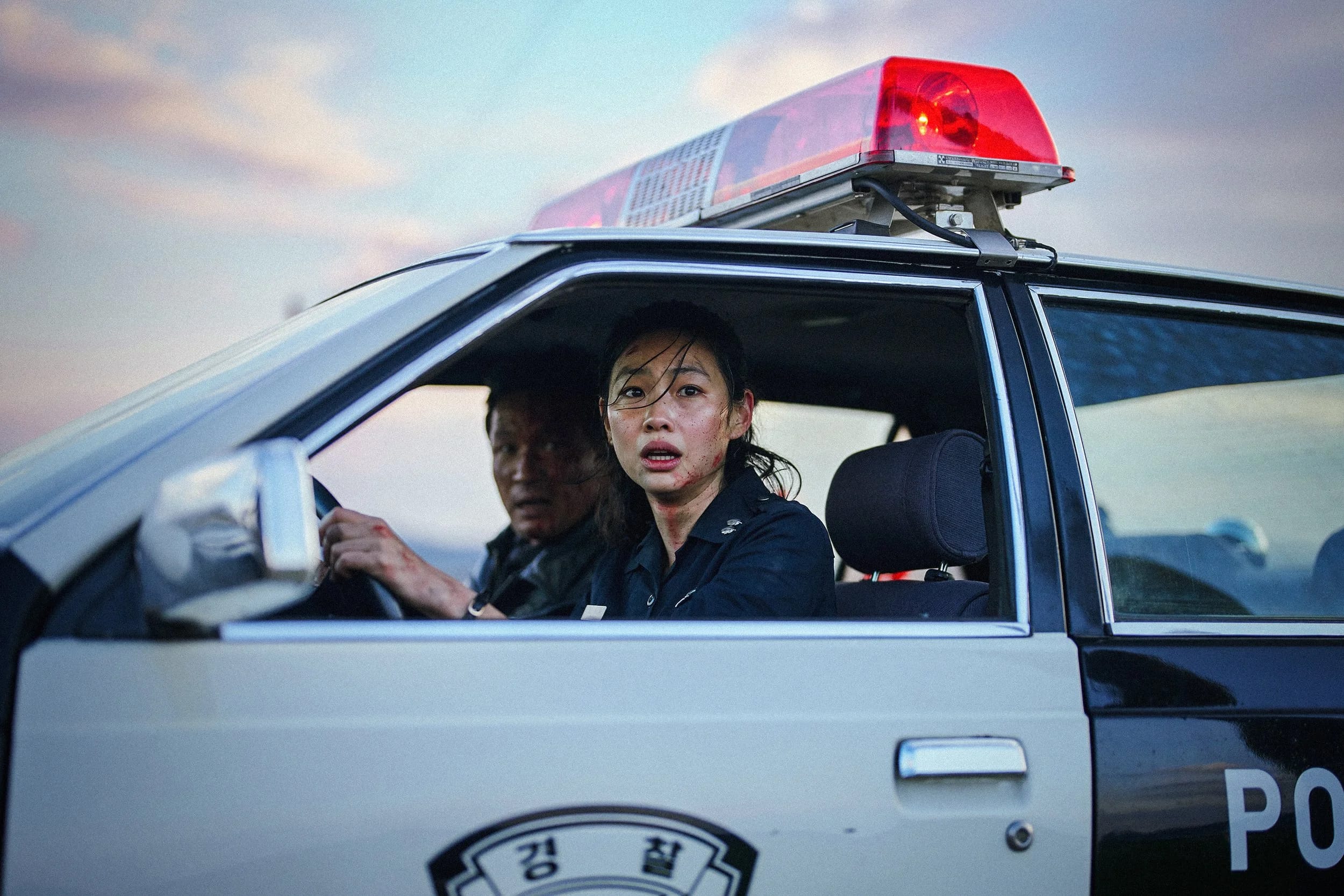
And then there is the car chase through the city. The camera does not watch it from outside. It rides along. You sit in that car while they hunt the thing, while they lean out of the windows and shoot at it, and the camera stays inside with them, turning with the action instead of cutting away from it. You are not watching a chase. You are in it.
The only thing I could think of was the car scene in Children of Men. Cuarón and Lubezki built a rig so the camera could move freely inside that car, and the result is still one of the most terrifying sequences I know, because there is nowhere to escape to. Hope gets very close to that feeling, and at blockbuster scale. As someone who has spent enough nights figuring out where to put a camera in a moving vehicle, I can tell you: that does not happen by accident.
The Jump
Zo In-sung plays Sung-ki, the tracker, and at one point he jumps from a galloping horse into a moving police car. One move, horse to car, and it is real. It is the best practical thing I have seen in a blockbuster in years. No digital double, no cheat. A human body, a horse, a car and somebody very brave.
Cameron would be proud of that one.
The Officer Who Does Not Laugh
Hwang Jung-min is excellent as a man completely out of his depth who keeps going anyway. No secret plan, no hero moment. Just a police chief doing the next thing, and then the next.
But Hoyeon is the real find. There is a scene where an old man from the village sits her down and tells her the story about the forest. I could not breathe anymore from laughing. The cinema was gone. And she does not break. Not once. She listens to him with complete seriousness, like he is giving her the most important testimony of the case.
And this is the brilliance of it: maybe he is. That scene is funny and tense in exactly the same moment, and it only works because she plays it absolutely straight. It is the kind of thing Korean cinema does better than anybody, the joke and the dread sitting at the same table. A lesser actress plays the reaction to the audience. Hoyeon plays it to the old man.
Five Minutes of Boardroom
Now the ending. The last five minutes are horrible. A cliffhanger that resolves nothing and smells of a boardroom rather than a filmmaker. I sat there genuinely angry for about ninety seconds.
And the irony is almost too good. A film called Hope that ends by withholding exactly that. No resolution, no relief, just a door left open for part two.
Back to Heppenheim
But then I let it go. Two and a half hours of that quality buys an enormous amount of forgiveness.
In 1996, Independence Day ended with fireworks and cigars and Will Smith dragging an alien across the desert, and a group of fourteen-year-olds walked out into a little town on the Bergstraße feeling like the world had been saved just for them. Hope ends with a promise instead of an ending. I am still angry about that.
I will still be first in line for part two. Fourteen-year-old me would never forgive me otherwise.
The biggest surprise I have had in a cinema in a very long time.
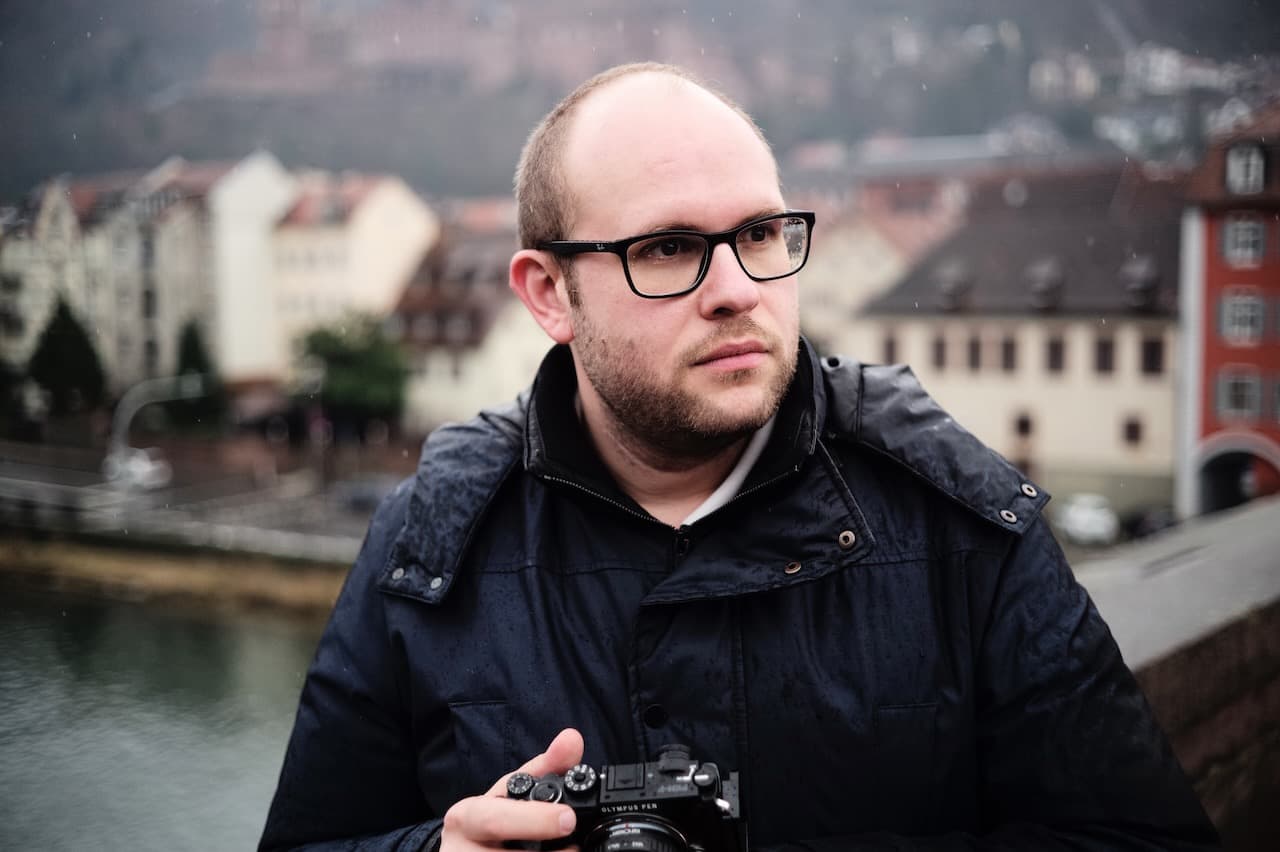
Jakob Montrasio
Frontend developer at DIE RHEINPFALZ, photographer under @yakobusan, occasional filmmaker — directed The Way of the Spur in Shanghai, co-directed the Golden Eye–nominated Souls of Zen. Started in Freiburg in 1982, still hasn't picked just one thing.
Related posts

„Arac Attack – Angriff der achtbeinigen Monster“: Ein herrlich überdrehter B-Movie-Spaß
Arac Attack – Angriff der achtbeinigen Monster (Eight Legged Freaks, 2002) ist der perfekte Film für alle, die bei der Vorstellung von gigantischen Spinnen zwischen…
„Hollywood Cops“: Ein Buddy-Movie der besonderen Art
Hollywood Cops bietet eine willkommene Abwechslung zum klassischen Buddy-Movie-Genre, indem es die typischen Konflikte zwischen Partnern durch eine harmonische Freundschaft ersetzt. Statt sich auf das…

„Monster Man – Die Hölle auf Rädern“: Ein Kult-Geheimtipp voller Humor und Horror
„Monster Man“ ist einer dieser Filme, die mit niedrigen Erwartungen beginnen und das Publikum mit Charme, Witz und einer Prise Wahnsinn überraschen. Die Mischung aus…